About This Site
Welcome to GreatSampleResume.com-your one stop leading online resource for free professionally written sample resumes! All samples have been written by our writers with over 20 plus years experience in the industry. As a part of our comprehensive service, we offer sample resumes for over 20,000 different occupations. You can search these samples by going to Browse Section. In this section we have resumes listed by various Job Title and Industries. We also have cover letters for over 5000 different job positions. You can use these samples to create your own cover letter. You can check them out Here.
To make our site more useful we are also adding Career and Education related information which includes job descriptions, duties, skill requirements, interview help, school guides, sample letters and much more. Our final goal is to become the best resource on web for everything related to career and education.
Browse Sample Resumes by Job Title | ||
|
Analyst Assistant Administrator Advisor Consultant |
Clerk Designer Developer Editor Manager |
Officer Specialist Teacher Technician Worker |
| View All | ||
Browse Sample Resumes by Industry | ||
|
Engineering |
Nursing |
Administration |
| View All | ||
Resume Writing Advice and Help | ||
| Resume Writing Guide - Articles, Tips, Formats, Templates and Examples that will help in creating your own Resume. (A must read section if you want to create the best resume) | ||
| Samples - Sample Resumes with elaborate job responsibilities and skills suitable for people with 5-10 years of job experience. | ||
| Examples - This section provides Examples of Resumes for various Careers. | ||
| Technical Samples - Sample Resumes for various Technical Occupations. | ||
| Entry Level Samples - Perfect Sample Resumes for Entry Level Jobs. | ||
| Objectives - Objective Statements for hundreds of different Occupations. | ||
| Frequently Asked Questions - Find Answers to most commonly asked Resume Writing related Questions. | ||
| Articles - These Articles will help you create a Job Winning Resume. | ||
| Tips - Resume Writing Tips for various industries. | ||
| How To Articles - Over Hundred How to Articles that will help in your Resume Writing process. |
Cover Letter Writing Help and Advice | ||
| Samples - Sample Cover Letters for various job positions. | ||
| Cover Letter Writing Guide - Articles, Formats, Templates and Examples that will help in your cover letter writing process. | ||
| Frequently Asked Questions - Find Answers to Frequently Asked Cover Letter Writing related Questions |
Letter Examples: | ||
| Recommendation | ||
| Reference | ||
| Resignation | ||
| Thank You |
Other Resources | ||
| Career Resources - Comprehensive Information about various Careers and Jobs. | ||
| Schools Guide - Information about Schools in the United States. | ||
| Letter Writing Guide - A Comprehensive Letter Writing Guide with Examples, Formats and Articles. | ||
| Skills - Skills you need to excel in Various Job Positions. | ||
| Recent Graduates - Career Information for Recent Graduates. | ||
| Education and Training Requirements - Articles about what education and training is required for for various occupations. | ||
| Salary Information | ||
| Articles on Job Outlook | ||
| Interview Questions and Answers - Answers to Commonly Asked Interview Questions for Various Job Positions. | ||
| Blog |
What is a Sample Resume
The single most significant introduction that an applicant can make for a position or a company is with their resume. Based upon, not only the content contained therein; but also, the format and style; the employer takes this first impression, and decides to interview the applicant or not. While many of us can write a resume that is acceptable, few of us know both how to make it sell our worth and do so in a format that is professional and compelling. Since this is often the difference between getting the interview and not, having a helpful sample resume as a guide is vital.
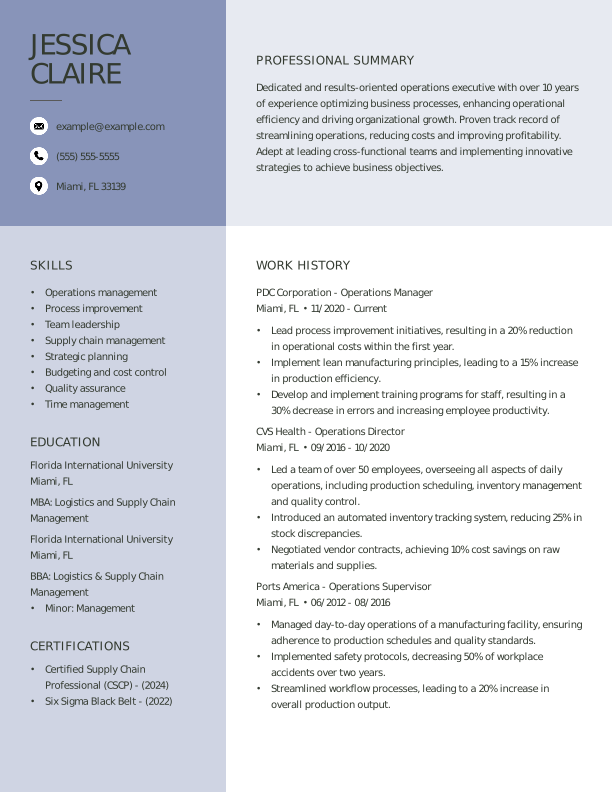
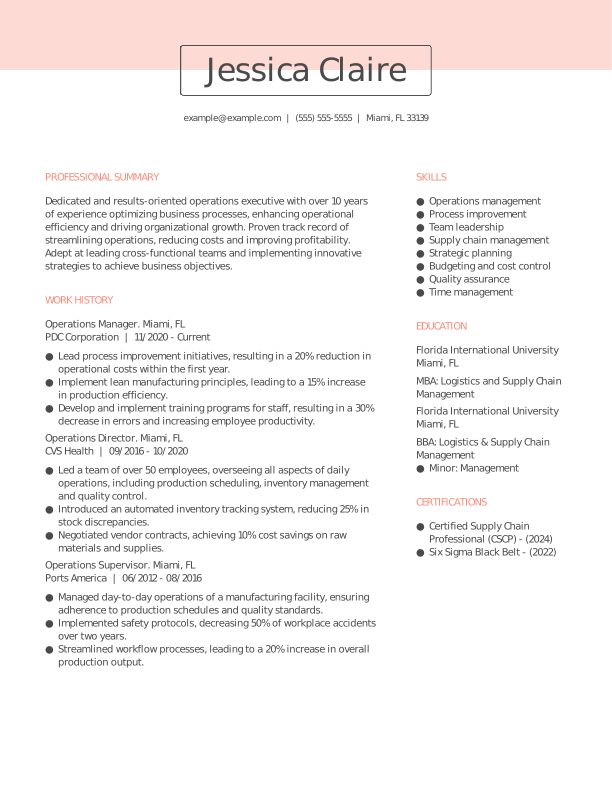
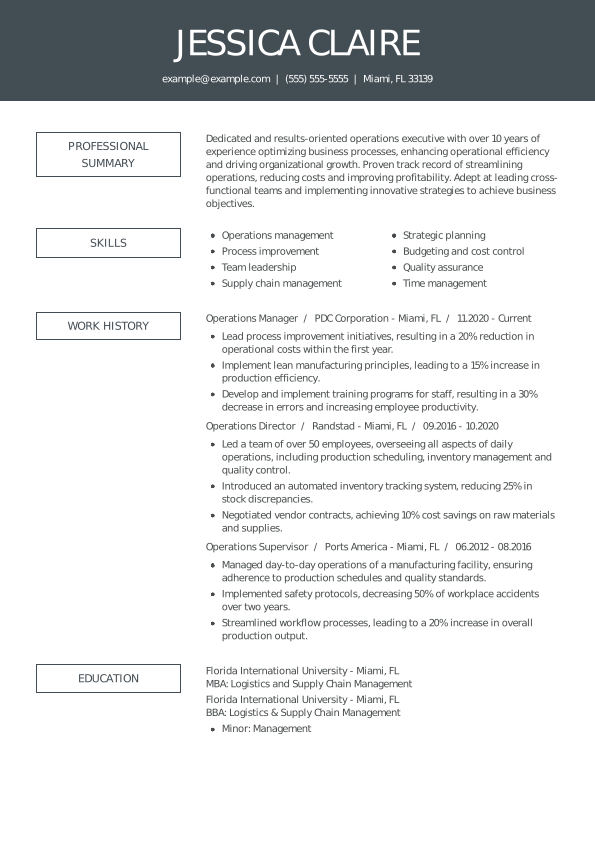
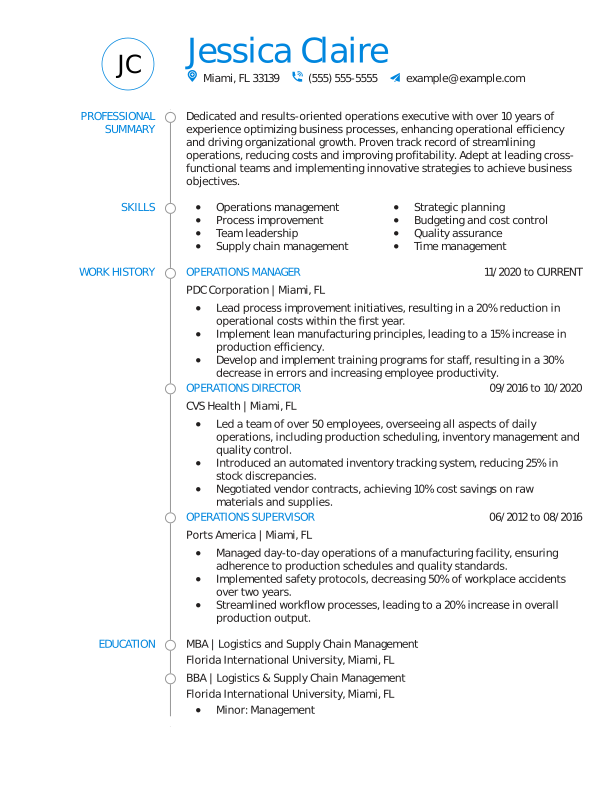
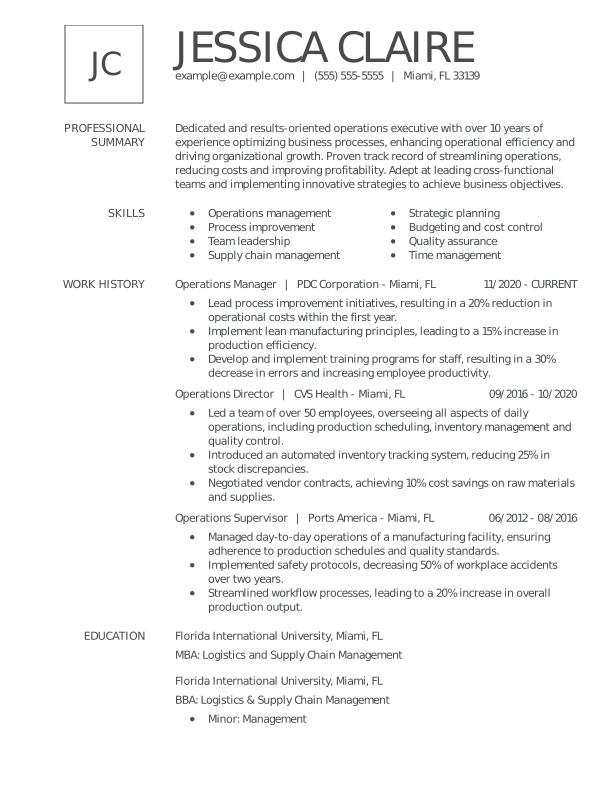
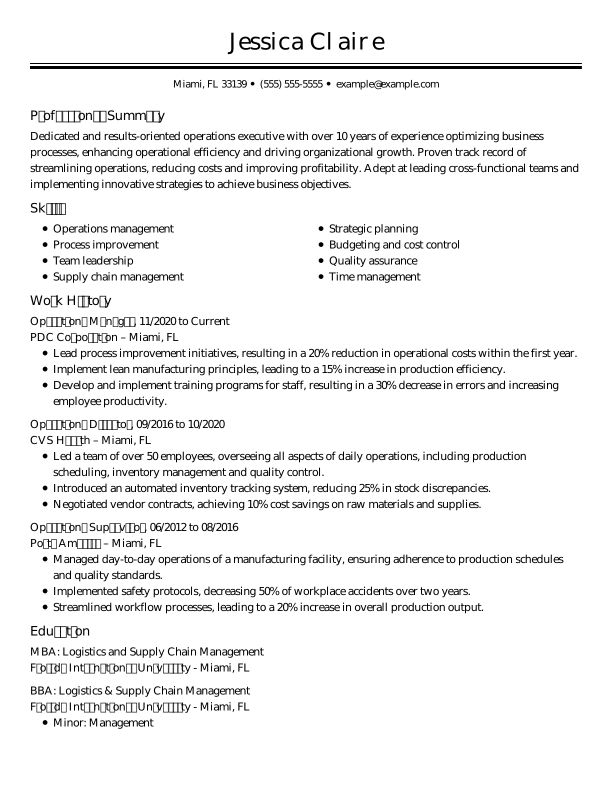
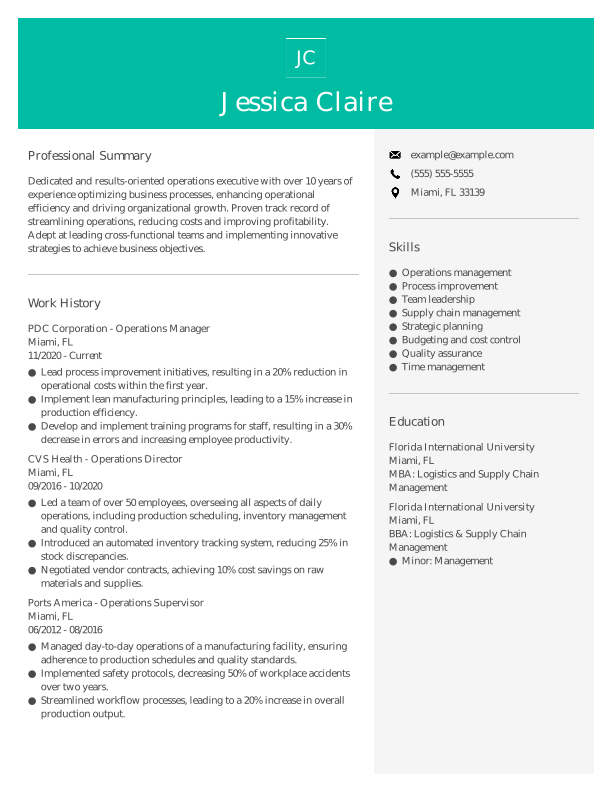
Heard of a sample resume, but not sure exactly what is does and what its function is? The sample resume is a sample of an applicant’s career history, education, and all other included topics; laid out in the professional format needed. Sample resumes help candidates know how to structure their career history and qualifications in a way that is professional and also compelling. They come in a variety of types. You could choose to use a sample resume based on the format, i.e. chronological, functional, targeted, or combination layouts; to best display your career value. Moreover, Sample Resumes come according to profession and industry, including the format and content that would work best according to what your profession is, what skills it requires, and what reporting on its value in a resume should include.
How to Write a Resume
The resume is the single most important material in acquiring the job or position of your dreams. While, of course, the education, skills, and career qualifications listed within a professional resume are most vital; after this, the resume acts as the single most valuable material in deciding your fate of getting the job or not. Why? Simply, because it is the very first impression-in most cases-that a hiring manager or prospective employer gets of you and your career value. Without an effectively presented resume and cover letter, your application for employment will be mostly likely tossed into the circular file; with no further thought given to your qualifications and credentials.
Brainstorm
The first step in creating a resume for any career history and qualifications is to brainstorm and jot down all the information in your career history that you find pertinent to your career goals. So, start with a chronological list of your employment history-along with details on start/end dates, employer name, job title, etc. Next, add information regarding all education and training you have participated in and been accredited with. Lastly, consider your wide range of skills in various aspects of your career roles and overall. This initial brainstorming will make the whole process of creating a resume-and one that is successful at getting the job-much easier.
Consider Skills
The next step in writing a resume is taking some time to consider all the general and specific skill sets you have to offer any position. At this point, brainstorm in a way that is general, so that you can jot down all the most valuable skills you’ve have or had. So, good examples of skills and responsibilities in a resume would be: communication skills, team playing and mentoring skills, managerial skills, etc etc. Next, consider specific examples of when or how these skill sets were used and what-the positive results that came about to prove the worth of these skills.
Report Responsibilities
What you were/are responsible for in a particular position is a key piece of information for a potential employer. It is often that many of us forget exactly how much or what we do, in the large and small scope of our career positions. This is why it is valuable to take some time and really consider all that you have been responsible for in a career position, and jot these down. Moreover, if you have access to your original job description from one or all of the titles in your career you have held; use this to report the responsibilities for each job in your career history that applies.
Research Industry/Profession
Whether you are a recent grad or a seasoned career person, you should always have an eye on what’s happening in your particular profession and industry. This includes advancements and innovations in your field, as well as what is expected of a professional in your position. This way, you know how to phrase and tweak all content sections of your resume to make it as cutting edge and valuable as possible to your prospective employer. Moreover, through regular research into your profession, you can learn what the advancement possibilities are, what requirements of education and training exist, and what you should be making or can expect to make in the career role that you have chosen.
Choose Your Format
Knowing which format to use for your resume is almost as important as what information it is built upon. While most applicants use the standard chronological or combination resume formats to describe their career qualifications and history, your particular career could be better suited to a different one altogether-as certain formats are more beneficial to different career situations. For example, perhaps, you have an impressive history of winning job positions at recognized firms; and want to show this. Your best bet would probably be a format that uses a chronological review of all jobs held in the past -with dates, descriptions, and details included. If, on the other hand, you have recently decided to change careers or perhaps have a time inconsistency in it; you’ll want to downplay this gap or lack of experience, by using a functional resume-which focuses on a detailed skill section rather than the chronological format. Choose one of the main four: functional, chronological, combination, or targeted to best present the positive and compelling aspects of your career, and downplay the negative.
Use a Sample Resume
Once you have the main bulk of content and shape of sections prepared, look into a sample resume that shows applicants who have already drafted a resume with details, and learn how to further shape and customize your resume to that format. Make sure that you don’t choose just any sample resume to adapt your resume information to. Every industry and profession differs in how the candidate who works in it is valued. This is evidenced through certain skills, career history, education and training, etc that are required for each of us to be successful in our own field. This said, you certainly don’t want to be using the same sample resume as a Computer Engineer, that you would need as a Freelance Writer. So, find a professional and winning sample resume, and customize the information you have already brainstormed into the package format of an effective sample resume.
Consider an Objective
There has always been two sides of this argument in applying for positions-to use an objective statement or not. The purpose of an objective statement is to clarify the purpose of one’s application to a particular company or entity. This is usually defined as the job title the applicant is seeking, what brief experience they bring to this position, and how this will benefit the employer. This said, should you write one? It all depends on two things: first, do you know how to write one? And second, is it right for your career situation. To the first issue, no applicant should ever write an objective statement if they do not know how to create one. This is because an objective is considered a primary piece of information, and if miscommunicated, could easily deter an employer from learning more about the candidate. The second of the issues refers to whether or not it helps the effectiveness of your career experience. For example, perhaps you are changing careers or seeking a new sub field within your industry. This move from one to another can cause a lot of confusion, if not defined through a working objective statement, with goals and direction highlighted.
Polish. Polish. Polish.
Though you may think having spent a lot of time on the content and format of your resume is enough prior to sending it off for review by a prospective employer. It never is. Take the time to review your resume for spelling, common grammar issues, and readability. Are the best adjectives and words being used? Have you confused one word for another? How does the font and indenting look? All of these details-though seemingly small-will meet with your hiring manager’s eye; and this is why every detail should be polished and reviewed to make it the most professional and optimized resume they receive.